Everyone is watching the wrong scoreboard.
The AI race, as it is usually told, is a contest of models — parameters, benchmarks, tokens per second. But the race is being decided somewhere the cameras never point: in concrete, steel, copper, kilowatts, and now in classrooms and hiring halls.
US corporate spending on equipment and facilities is set to rise roughly 40% between 2021 and 2027 — more than three times the pace of Europe. The driver is not a consumer boom. It is the AI race, translated into data centers, chips, and the buildings that hold them.
Irish lawmakers are reconsidering a ban on nuclear power that has stood since 1999. The reason is not a change of heart. Data centers now draw around a quarter of the country's electricity, and the share is still climbing.
Semiconductor cram schools are flourishing in Seoul as applications to Samsung and SK Hynix surge, fuelled by record earnings and worker bonuses.
US business schools are racing to prepare students to become "chief AI officers" — a role that barely existed two years ago and now has a classroom pipeline.
Read together, the four signals say something uncomfortable about the technology everyone keeps calling weightless.
AI is sold as the lightest thing we have ever built — pure code, pure cloud, no mass, no footprint. But the physics of the buildout disagree. The models run on silicon, the silicon sits in racks, the racks fill buildings, and the buildings drink a country's worth of power. The "weightless" technology turns out to be built from the heaviest materials we know — and it is now heavy enough to bend a nation's energy policy, to fill classrooms, and to mint a new job title.
This is where the harder question begins.
Who is laying the stones?
Every individual move is rational. A chief executive approves a data center because the demand is visible. A government reopens a nuclear debate because the grid cannot keep up. A student enrolls in a semiconductor academy because the bonuses are real. A business school launches a chief-AI-officer track because the recruiters are asking for it. Each decision, taken alone, makes sense.
But no single actor — not the executives, not the governments, not the students, not the universities — willed the whole. No one sat down and decided that Ireland should spend a quarter of its electricity on servers, or that Seoul's classrooms should pivot to semiconductors, or that America should out-build Europe three to one.
The buildout has no architect. It is a form of spontaneous order — the same phenomenon that makes fireflies flash in unison without a conductor, or metronomes on a shared table fall into step. In the strategy of Go it has a name: 势 (shì · Japanese sei, ikioi) — the momentum that emerges from the arrangement of stones, a force no single stone intended.
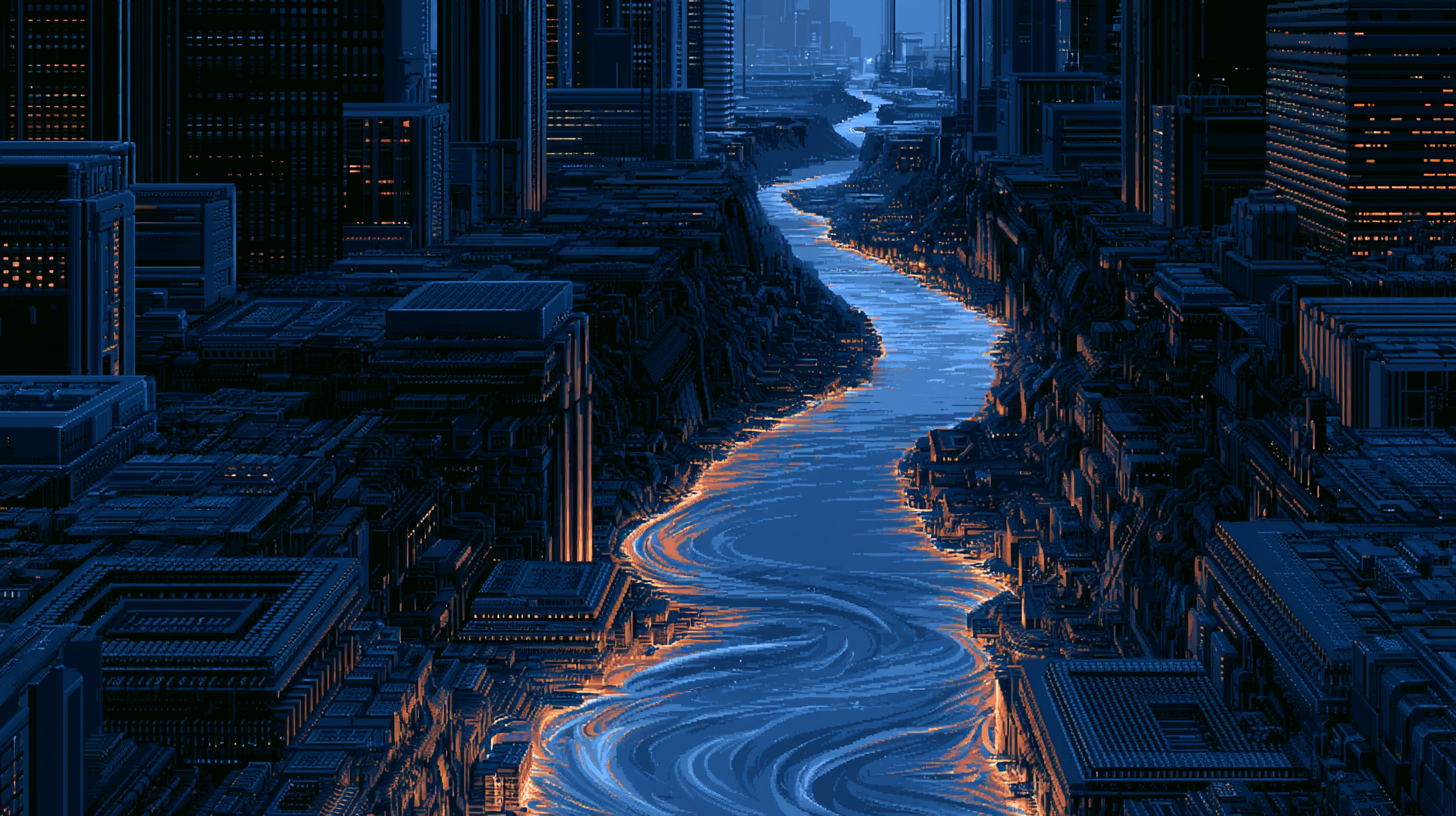
The strategist Sun Tzu saw the same thing in water: 兵无常势,水无常形 — forces have no constant form; water has no constant shape. Water does not decide its own path. It takes the shape of the ground it meets, flowing toward the low places, the path of least resistance. The AI buildout is water: it flows toward where the returns are, where the talent is, where the grid has spare power — and no one directs it.
The 势 is real. It is also, for now, unlike anything the last boom produced.
The dot-com era was frenzy without a foundation: imagination with no increment — eyeballs, not earnings. This cycle is different, and that is the uncomfortable part. It is more frenzied and more rational at the same time. The frenzy is visible in the leveraged chip funds and the semiconductor cram schools. The rationality is visible in the same data centers that produce revenue, not just press releases — and in the business schools building a measured pipeline for a role the market actually asked for. Imagination and increment are coexisting — and that coexistence is what gives the 势 its weight.
So the question this piece started with — is the momentum ours, or is the machine quietly laying the board for us? — has a third answer.
It is neither. AI has no intent; it cannot place a single stone. And no human is steering, either. The momentum is emergent — built from a million rational moves, none of which planned the shape they are forming.
Water does not need an architect. That is precisely why it carves canyons.
Content is for informational and analytical purposes only — not investment, financial, or legal advice.